Gentrepreneur brings together six higher education institutions that work collaboratively to support student and researcher entrepreneurs across the region. While each university operates its own internal systems, the network required a shared platform that could operate across institutions to coordinate activity and measure impact.
Startium’s platform provides a single digital access point for entrepreneurship support while enabling coaches to collaborate more effectively across the network. The technology also helps Gentrepreneur match entrepreneurs with the right opportunities at the right stage of their journey and build a growing knowledge base of regional expertise.
Importantly, the platform enables the partnership to track engagement and measure outcomes, supporting the reporting requirements of the economic development organisations funding the initiative
As AI becomes more embedded into everyday business activity, entrepreneurship support will increasingly move toward always-on infrastructure that is accessible in real time. This transition is already beginning. Enterprise Northern Ireland is ahead of this shift through its commissioning of eConX, a web platform and mobile app that provides business owners with 24/7 ecosystem navigation, personalised support recommendations, access to advisors, application assistance, and connecting them with the right support at that critical moment.
We are now seeing similar services emerge across Europe, where organisations are beginning to move away from fixed start-and-finish delivery models and a set number of hours with an advisor, toward support infrastructure that always delivers, rather than only when a cohort begins, a business advisor is paid by the hour or funding becomes available.
The ESOs that succeed over the next decade will not simply be programme providers, property managers, or loan administrators. They will become intelligent ecosystem infrastructure. Their value will increasingly come from their ability to curate trusted ecosystem intelligence and make it accessible in personalised ways.
This matters because we are entering a period of significant economic and technological disruption. AI, geopolitical instability, climate pressures, changing labour markets, and shifting business models will continue to reshape how economies function over the next decade.
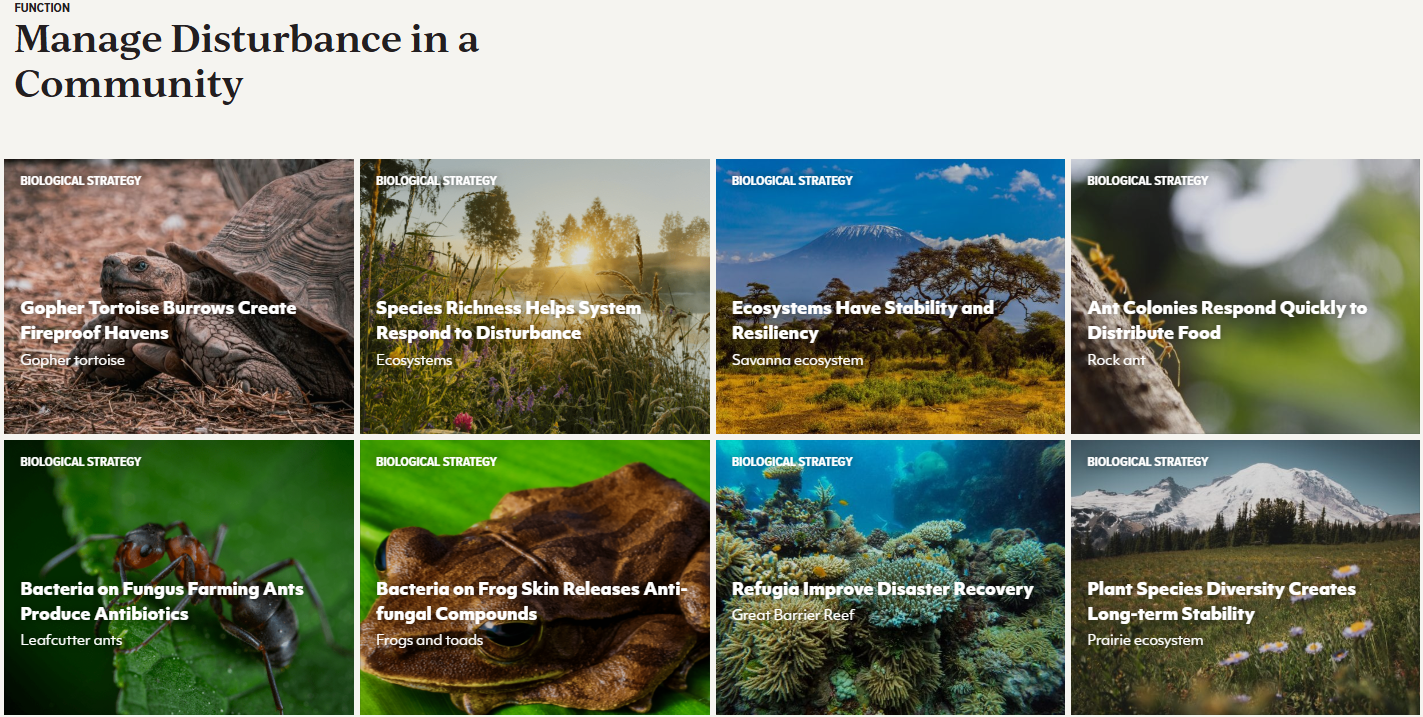
When we look at natural ecosystems, one of the consistent lessons is that we know the ecosystems that recover the quickest after a disaster are those with interconnected infrastructure, relationships and connections. These allow systems to adapt and recover quickly under pressure. Entrepreneurial ecosystems are no different.
The regions that build strong connective intelligence between founders, organisations, opportunities, expertise, and capital will be significantly more resilient than those relying on disconnected actors, competing support organisations and ill-informed policy. This principle is explored particularly well by AskNature , which examines how resilient ecosystems function and adapt in the face of disruption.
Investment in digital infrastructure, the connective tissue, is therefore not simply a technology upgrade for ESOs, it is future-proofing. The ESOs and regions that invest now in connected ecosystem intelligence, interoperable systems, and always-on support infrastructure will be significantly better positioned to help entrepreneurs respond, adapt, and recover during the periods of uncertainty ahead.
[Ask Nature Library of Natural Ecosystems – Asknature.org]
The rise of AI and demand for personalised resources does not reduce the importance of people within entrepreneurship support systems. In my opinion, it increases the importance of the right humans.
AI will increasingly handle generic business information and traditional advisory activity that entrepreneurs may previously have joined a ‘programme’ to access. Business owners can already use AI to build marketing plans, create financial forecasts, analyse competitors, and develop pricing strategies. This changes the role of human support.
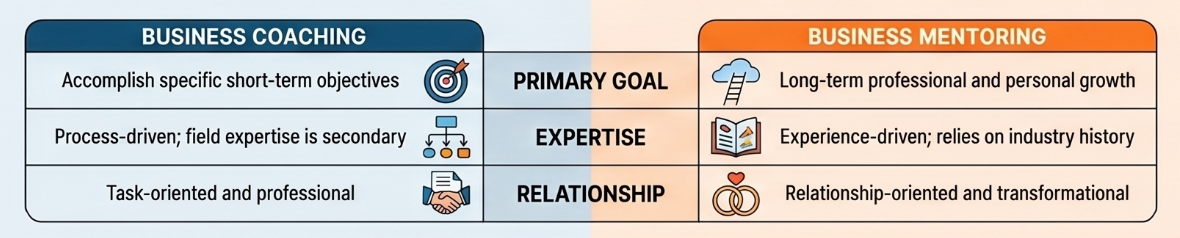
As advice becomes increasingly accessible through technology, the distinctions between advisors, mentors, and coaches should also become much clearer.
Mentors become more valuable because they bring lived experience, perspective, relationships, judgement, and context that technology cannot easily replicate. Their value comes from having personally navigated similar entrepreneurial journeys and helping founders interpret challenges through experience rather than theory alone.
Coaches also become more important because great coaching is not about giving answers, but more about helping business owners maintain momentum, navigate uncertainty, improve decision-making, and stay focused on executionl.
[Created with Notebook LM]
As these roles become more clearly defined, I believe it is an obvious prediction that the future value of one-to-one support shifts away from simply delivering information and toward facilitating trust, accountability, perspective, and high-value ecosystem connections.
A shift from being a library to being a lens.
The move toward personalised support will also change how entrepreneurship support is measured. Funders will still rightly expect evidence of impact and return on investment, but entrepreneurship support will increasingly move away from measuring attendance alone. We have already seen a similar shift happen in employment, where organisations have moved beyond presenteeism and began focusing more on outputs and outcomes.
Entrepreneurship support will move in the same direction, frankly, we should always have been focused on outcomes not activity. An entrepreneur attending ten workshops does not mean they are building a stronger business than someone who attended one targeted intervention, received the right introduction, and moved forward quickly.
The regions that succeed over the next decade will not be the ones with the most programmes or the highest participation numbers. They will be the ones that make support feel frictionless and can connect interventions directly to economic outcomes. This may sound obvious, but without the right digital infrastructure, this is incredibly difficult to achieve.
To provide personalised entrepreneurship support at scale, ESOs must cultivate deeper collaboration and gain a clearer perspective on their specific roles. This transition demands the development of more robust ecosystem intelligence and the implementation of advanced digital infrastructure that surpasses the capabilities currently found in most ESOs today.
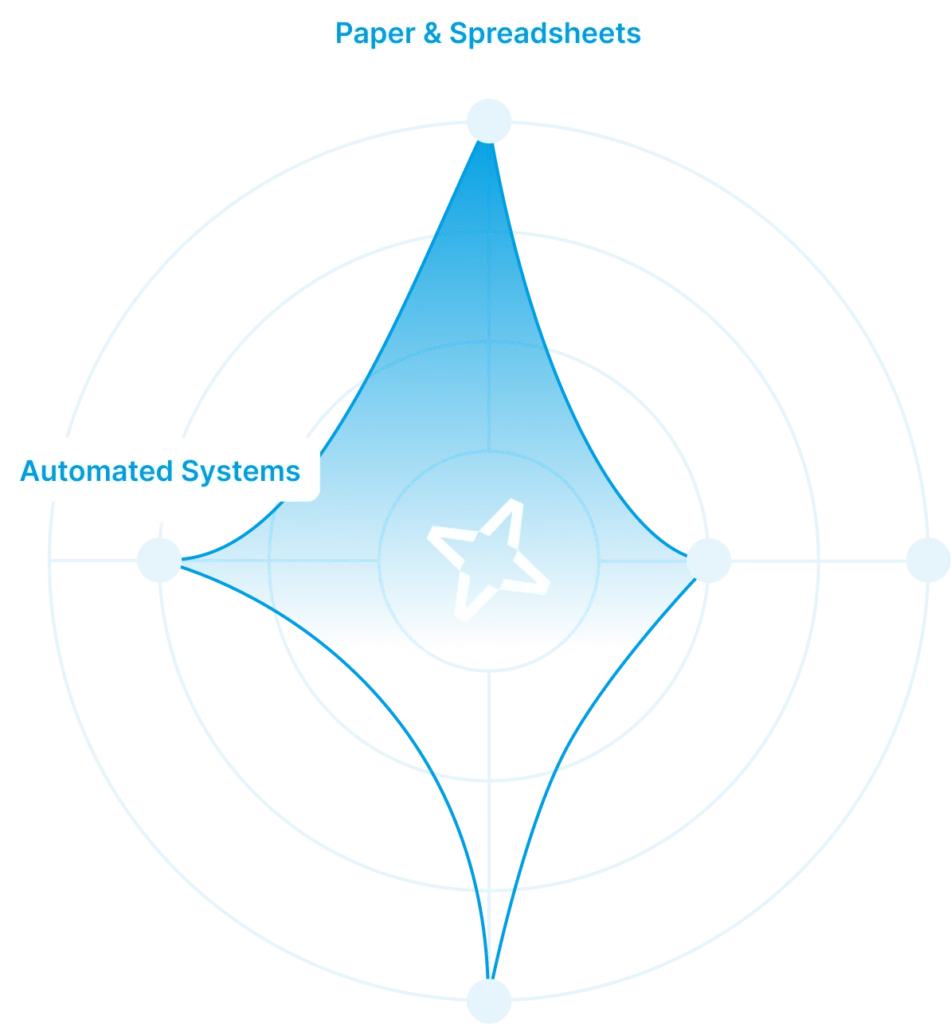
Many organisations are still operating across fragmented systems, disconnected tools, siloed data, and manual processes. But personalised, always-on support cannot function effectively without structured ecosystem intelligence sitting underneath it.
Part of the reason I left my role as a university Entrepreneurship Manager to build Startium back in 2021 was because this shift became impossible for me to ignore (I was using 11 different software tools to deliver a support service). Entrepreneurship support providers cannot deliver personalised experiences at scale using fragmented systems and disconnected data.
Something I’ll explore in greater detail in my upcoming article about the fourth Shift: the rise of the agent-ready ESO. Because eventually, entrepreneurs may not access support systems directly at all.
Their agent will do it for them.
We’re trusted by Universities, Governments, Enterprise Support Organisations & Economic Development Agencies.
Discover where you are on your digital transformation journey.